
Commentary by: Nick Lum, Founder of BeeLine Reader
If you’ve ever been to an eye doctor, you’ve probably heard the mantra: every 20 minutes, you should spend 20 seconds looking at something 20 feet away. This advice is meant to help office workers combat visual fatigue or eyestrain that can set in if you spend all day doing ‘close work,’ like reading on a computer screen.
These days, it’s not just office workers who are experiencing and overdose of close work. In normal times, students switch between various focal distances (watching a teacher give a lecture, doing close work, working in groups, and socializing with friends). In the world of distance learning, all of these activities are now mediated by a screen—which means that students are spending far more time staring at a single plane that is just a foot or two in front of their faces. Not surprisingly, this lack of focal diversity is adversely affecting students and making it harder for them to do their work.
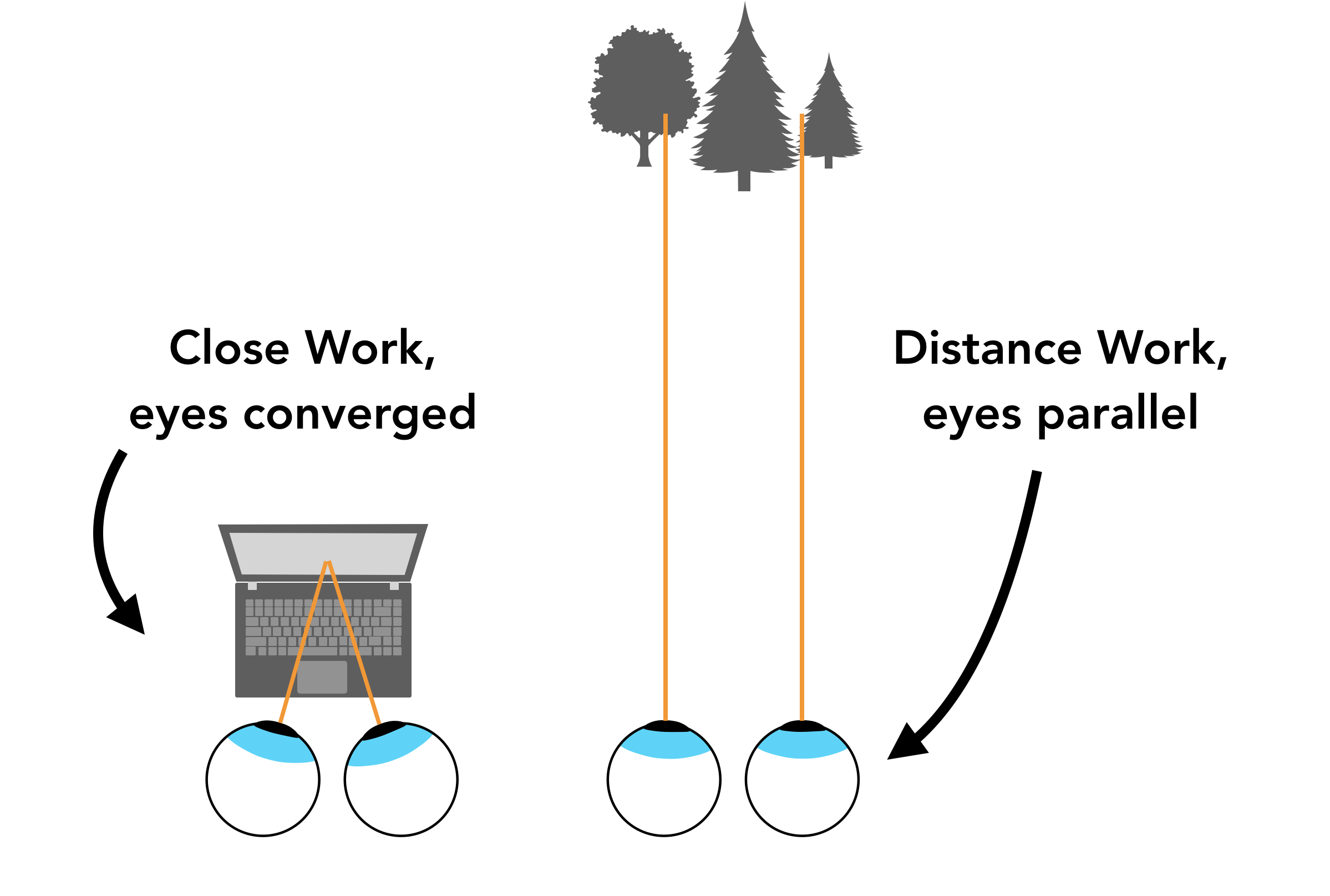
Close work can be especially taxing because it requires bringing your eyes together (‘converging’) and forming a triangular shape, as shown below. By comparison, looking into the distance allows you to relax your eyes into a parallel position, which is easier and more comfortable.
Reading is even more taxing than merely looking at fixed spot up close because reading involves constantly shifting the angles of your visual triangle and keeping your eyes perfectly ‘converged.
While it is certainly unfortunate that so many students are impacted by these challenges, the one upside is that they bring greater awareness to the need to make reading on screen less burdensome for students. Students with